Showing posts with label Writing. Show all posts

"Bee" a Good Friend Writing

Valentine's Day in the classroom can be lots of fun. It's a great time to focus on friendship with your students. This time of year students can always use a refresh on what it means to be a good friend.


This post contains affiliate links for your shopping convenience. I earn a small commission each time someone makes a purchase through one of my links. For more information about my Disclosure Policy, please visit this link.
 
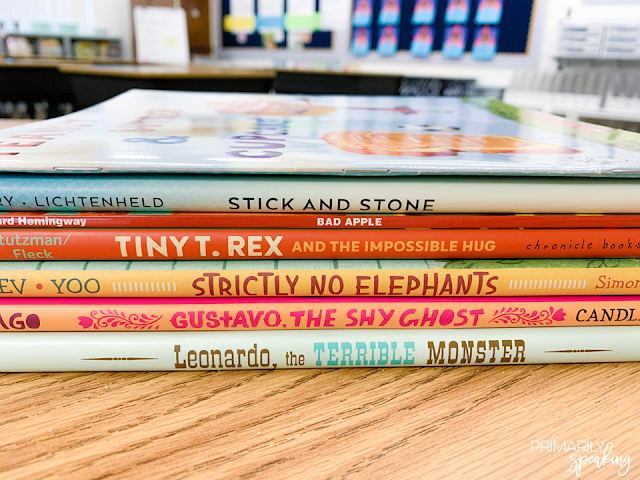
We read lots of books about friendship. Check out my favorites below:


Here's a linked list, which also includes a few other books not shown here.

Then, we make an anchor chart listing what makes a good friend and ways that the students are good friends. I forgot to take a pic of this - ugh! But, I think you get it. ;)

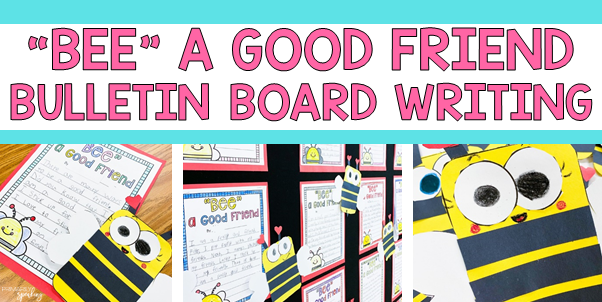
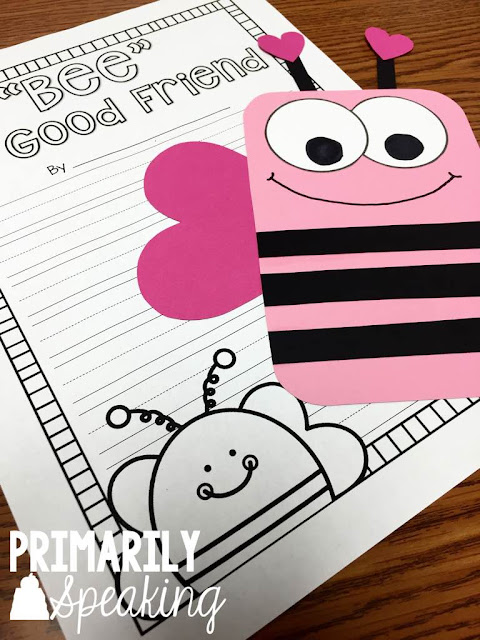
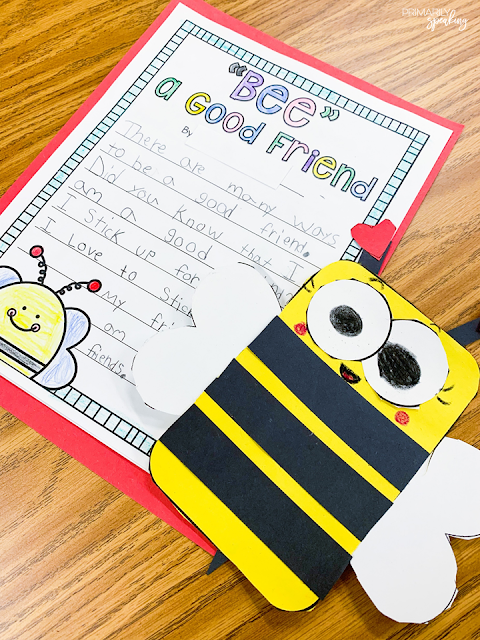
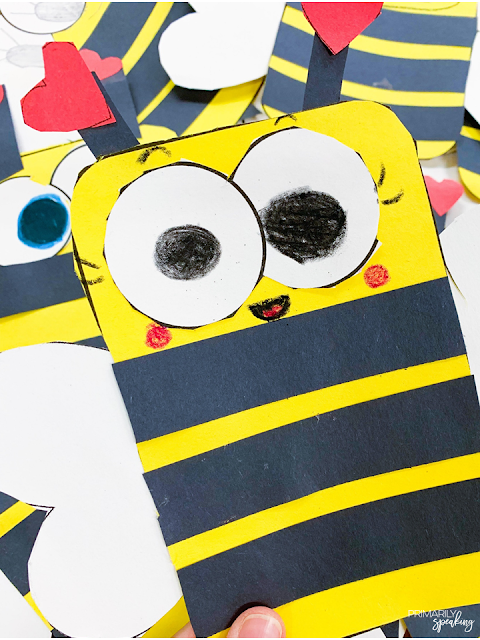
After we have sufficiently talked about friendship, the students write a paragraph telling how they are a good friend. We use this adorable writing paper and then make the fun little craft to go with it. You can make a yellow bee, or a pink bee if you want to be super festive. So cute, right?


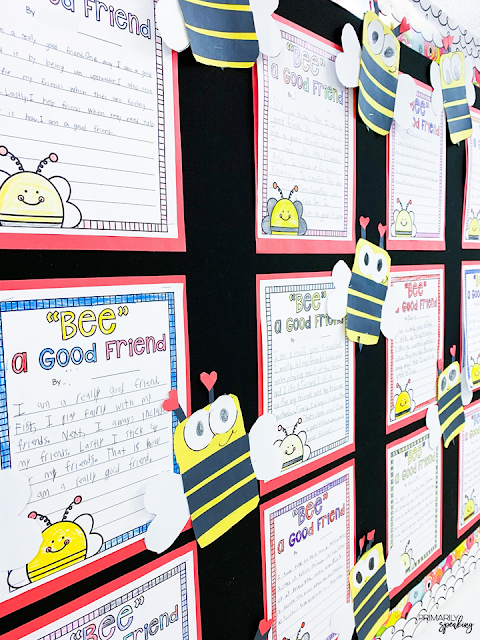
I display the students' writing and crafts on our hallway bulletin board along with the bee craft. 


I like to place a piece of red construction paper behind each piece of writing. I display the writing in rows and then scatter the bees between their work. It makes for a super cute and festive display.


You can easily replicate this board by using my FREEBIES linked below!

Enjoy!

DON'T FORGET IT, PIN IT!


Share It:

Shared Research in the Primary Classroom

If you teach primary there's a pretty good chance that you use shared writing in your classroom. It's a great way to model the writing process and it shows students what fluent writing looks like. But, shared research is just as important for developing writers to participate in.


Just as shared writing has its benefits, so does shared research. I use shared research often in my classroom and today I'm going to share what it looks like in my classroom. But first, let's cover the basics.

Shared Research
When I talk about shared research I'm referring to when you lead your students in the process of gathering facts and information on a topic. The process of gathering information is done in a whole group setting with the teacher sharing a text with his/her students. I sometimes call this shared information gathering. I've used this strategy for years, before it was included in the CCSS. And, chances are, you have to.

Why It's Useful
This strategy is especially helpful when the task of extracting information from a text is new to primary students. It is a skill that needs to be taught and modeled like any other skill we teach.

It's also useful when you have limited texts from which to pull those facts. We don't always have class sets of books on a single topic that students can use to independently collect facts. It's also helpful when your technology is limited. Beyond all that, if students don't know how to properly find relevant facts, having those books and enough technology becomes a moot point.

Shared research is especially helpful when you need to integrate your language arts and science/social studies time. If you don't have time in your day, due to school and/or district time requirements to have designated social studies or science time, you can easily integrate these subjects into your writing time.

Using the Shared Research
Once you have gathered information, your students can use it in a number of ways. They could use those facts to complete an informational writing piece, a constructed response, a graphic organizer, or a fun research project.

In My Classroom
I am one of those teachers whose schedule dictates that I integrate my science and social studies into my language arts time. I tend to use shared research when integrating science/social studies and writing. It works well for me.

Since I integrate science and social studies into my writing time, they essentially become a writing topic. Usually, these topics are best suited for informational or opinion writing, but sometimes, we do a research project in the form of a book or project.

Gathering the Information
This is how I facilitate shared research in my classroom.

Select a topic. Depending upon the time of year, we research various animals, historical figures, or events.

Determine what you'll research each day. If we're researching Abraham Lincoln I decide ahead of time what we will focus on each day (early life, beliefs, accomplishments, etc.).


Select a text. I don't always read an entire text in one sitting as each day we are focused on gathering specific information. Again, if we're researching Abraham Lincoln's early life, I focus on that information in the text I've selected. If you choose to do the same, I suggest you identify which pages you'll focus on ahead of time. 

Decide how students will use the information as you gather it each day. Sometimes I have the kids use the shared research to fill in a graphic organizer. Or, if we are working on a research booklet, they can use the information to work on relevant pages in their booklet. Or, they might use that day's research to write a few sentences summarizing what they learned. We are never ready to write a full informative or opinion piece after just one day of research.

Read aloud. Before I read aloud the selected section of text to my students, I set a purpose. I tell them that we will be focusing on finding specific information (like facts about Abraham Lincoln's early life, the years before he became an adult). 

Take notes (as a whole group). As I read to the students, I stop periodically (maybe every 2-3 pages) and ask them to share facts from the text up to that point. This usually requires some prompting on my part as they sometimes gloss over those key details that you know need to be included. I write their responses on an anchor chart. I continue to do this until I'm finished with that day's reading selection. At the end, I ask them to share other facts they recalled from the reading and add them to the chart. By recording the facts on a chart, the students can easily access the information we have gathered together when it is time to use it. 


Task students with using the information you've gathered. Again, as you gather a bit of information each day, task your students with using that information in some way. They could fill in a graphic organizer, or write a few sentences summarizing what they learned.


Get to writing! Typically, we use shared research for a week to a week and a half. By then, we have plenty of information to work with. Once we've gathered enough information, my students use the shared research to write about the topic. Depending upon the time of year and/or the needs of my students, we may do some shared writing first.
I like taking a structured approach to shared research. Typically, second graders don't inherently know which facts to focus on when they are asked to independently gather facts. They need scaffolded, teacher directed exposure to this process before they can truly be successful at the independent level.

That's it, friends. My brand of shared research (aka shared information gathering) in a nutshell.

DON'T FORGET IT, PIN IT!


Share It:

All About Me {The Perfect Back to School Theme}

Raise your hand if you love using the All About Me theme at the beginning of the school year.  My hand is raised. Actually, both hands are raised. All About Me is the perfect theme for back to school!


7 Reasons the All About Me Theme is Awesome
The All About Me theme is nothing new. It's a traditional theme typically reserved for the beginning of the school year, but it is also relevant all year long. Just because this theme is traditional doesn't mean that it lacks value. It has so much to offer:
  • It helps students learn about each other (when information is shared with the class or a partner).
  • It encourages self-awareness and self-reflection.
  • It celebrates individuality.
  • Students can learn about their similarities and differences.
  • It promotes self-esteem and self-identity.
  • It reinforces a sense of self.
  • It builds confidence because students are able to report on something they are an expert in (themselves!).
What this Theme Looks Like in My Classroom
Every year, I have my students make an All About Me book. They work on this keepsake project during the first or second week of school and since we work on it bit by bit each day, it takes approximately 2-3 weeks to complete.


As mentioned, it's a keepsake project, but I also use it as a means to learn about my students and for the students to learn about each other. More on that in just a moment.

The project starts off with several simple prompts or organizers that require little to no writing. These kinds of pages are great for helping students focus on small bits of information at once. It's too overwhelming to task primary kiddos with jumping in and sharing everything at once. Here are a few examples.


These kinds of pages also give students ample opportunities to work on their quality of work habits (coloring in the lines, using colors that make sense, and so forth) without worrying about lengthy writing assignments.  I like to display the poster shown below via my classroom projector as students work so they can be reminded of my expectations.


You can grab this free poster HERE. Print it out and display it in your room, or simply project the PDF onto your board so students can see it while they work (my favorite).  :)

As the project progresses along, the students begin to include more writing about themselves. They make lists, use writing prompts, and eventually write an informative piece about themselves. These pages were designed to not only provide students opportunities to tell about themselves in more detail, but to scaffold them as they ease back into the writing process at the beginning of the school year.  Once again, here are a few examples.


Using the Keepsake to Build Community
As we work on this project, one day at a time, I build in share time.  This is how the students are able to learn about each other, and come to recognize their similarities and differences.

This built in share time can look different from day to day. You gotta keep them on their toes, right?

Here are a few ways the students share the information on the pages they've completed:
  • one on one with a classmate
  • one on one with a classmate and then each student shares something about the other with the class
  • with the entire class (while sitting in my read aloud chair and/or using the class microphone)
  • with the entire class (while projecting their completed page via the document camera)
  • in groups of 3-4 students
These built in share times are great for working on oral communication skills as well as cooperative learning skills.

All About Me Keepsake Book
You can find the complete All About Me keepsake project featured in this post in my TPT store. Click the image to be taken to the listing on TPT.


 DON'T FORGET IT, PIN IT!


Share It:

Writing Prompts in the Classroom

Raise your hand if you love writing prompts!  I think that writing prompts are one of those resources that people either love, or hate.  I happen to love them.  #sorrynotsorry

Using Writing Prompts

I don't use writing prompts exclusively by any means, but they are a handy resource to have around and I do integrate them into my regular curriculum.  They help offer the students choice during our writing time, and they help them practice the skill of "writing on demand."  More on that in a minute.

So, why do I love writing prompts and how do I use them?  That's what I plan to share.  Read on, teacher friends!

One thing I love about writing prompts is that they are a great way to provide choice, and who doesn't love having choices?  I'm a firm believe that students should have choices, when possible.  During our writing time, the students write in their journals when they are finished with that day's task.  But, sometimes they just don't know what to write about.  This is where prompts come in handy.  So very handy!

I have several small trays filled with prompts on rings.  When the students have trouble coming up with an idea, they take a tray to their table group (so others at the group can use them too, if needed).  They usually end up finding a fun idea to write about.  Sometimes the prompts help them find an idea of their own!  These prompts from Lucky to be in First are great!


My students also love this set from Lori Rosenberg (Teaching with Love and Laughter).  Note: she has recently updated this product so the cards look a bit different now (in case you check them out...and you totally should).


And, this set from A Cupcake for the Teacher is also great!


Our monthly Roll-a-Story boards are also pretty popular! This monthly board gives the students even more options when it comes to their free writing time.  If they don't want to use a prompt card, but need an idea, they can use their Roll-a-Story board.

I mentioned that these are pretty popular...let me put it this way, if I forget to pass out a new one at the beginning of each new month I usually hear this, "Um, Mrs. Salazar, you forgot to give us a new Roll-a-Story board." #yikes


The students keep their individual boards in their writing folder for safe keeping, and they also store a die in their pencil box.  When they get a new board they are given the option of recycling the old one, or taking it home.  They always opt to take it home.


The way these work is pretty simple (and fun).  Roll a die, match the number you rolled on the board and follow the prompts.  Each prompt gives a character, a setting, and a problem.  Most of the prompts encourage the students to use their imagination and to write creatively.

You can check out these prompts here.  And, you can grab a (free) sampler mini-set here.  :)

Designated writing time aside, sometimes I find that I need writing prompts for reasons other than providing choice.  I might need a prompt to use as a homework assignment, or when I'm planning for a sub.  Sometimes our schedule gets disrupted and we don't have time for lengthy writing projects.  That's when prompts like my new Writing Prompts for Anytime come in super handy.  They fill a need while providing meaningful practice!


Aside from being a great resource for homework, subs, and when there are disruptions to our routine, prompts of this nature also give students practice with the skill of "writing on demand." Anytime I can give my students meaningful skill practice, I'm a happy teacher! 

What do I mean by "writing on demand?"  I mean that the students have to respond to a prompt that doesn't involve choice.  Hear me out.

I frequently pick the brain of our academic coach at school and during the course of one of our conversations, she explained that students need to be able to respond to designated prompts.  This is something that is expected of them in the world of testing, so practicing the skill from time to time isn't detrimental, it's great exposure to an important writing skill.


This isn't to say that the only way to use prompts like this is "writing on demand" skills practice as described above. You could easily photocopy a few different prompts and place them in your writing center, thereby offering your students choice.  That's another thing that is so great about writing prompts, they are versatile!

When I made this set of prompts, I wanted to make sure it was versatile enough to be used for homework, in class, with a sub, in a center, for assessment, etc.  But, I also wanted to make sure that it was designed to support students as they learn to check their own writing.

So, no matter how you use them, these prompts include a built-in checklist for students to refer to when they check their work. Primary students need lots and lots of practice when it comes to checking over their own work.  Developmentally, it's a tough task, but it isn't an impossible one. And, again, I'm all about providing the opportunity to practice important skills!  

A simple list like this is manageable for younger learners, which is important when you're trying to learn a new skill.  You can check out this set of handy dandy prompts here.

Thanks for reading, friends!  I'd love to know, when it comes to writing prompts, do you love 'em or hate 'em?

Toodles!


Share It:

Class Coloring Book Project (A Class Book with a Twist)

I love class books.  We make them all the time in my classroom, and they are always a student favorite.  But, this week, I decided to make a different kind of class book...a coloring book!

How to Make a Class Coloring Book

I have used this idea in the past, but it was just one of those ideas that got lost in the filing cabinet the past few years. I really need to dig around in there more often! 

With Thanksgiving being only 13 days away, I thought it would be fun to make a Thanksgiving coloring book that the students could take home with them over the holiday and color. Turns out I wasn't wrong.  My students were pretty excited about the idea of making a coloring book!


**Note: You could make a coloring book for any holiday, or any season. Keep reading!

Each student completed a page for the coloring book.  I gave them the following sentence starter: "Thanksgiving is...."  We brainstormed ideas as a whole group and I wrote them on the board (and, in typical fashion, forgot to take a picture).   From there, the students chose an idea from the board (or used their own idea) to complete the sentence starter.


Then, they drew a picture to match their sentence.


This does take a bit of coaching.  Since they are making a coloring book, the images need to be an outline drawing that is easy for others to color.  I spent some time talking about how their pictures needed to be simple, emphasizing that they should try to eliminate small details (this can still be difficult for some).  We talked about the kinds of pictures we see in coloring books, and I even showed them an example (from a coloring book, and my own example below).

 
They drew their picture with pencil first.  Then, they traced their writing and picture with a Sharpie and erased any pencil lines that could still be seen.


When they finished their pages, I copied them, and stapled them into coloring books.  Easy peasy!  The kids are super excited to take their coloring books home, and they were so proud to send a set to their Pen Pals too!

You can grab the FREE template and cover page for this coloring book here.  :)

If you're interested in class coloring books that can be used throughout the year, be sure to check out my Class Coloring Book Templates on TPT. 


DON'T FORGET IT, PIN IT!

How to Make a Class Coloring Book


Share It:

Pumpkin Pie in a Cup {Tasty Writing Activities}

If you ask me, pumpkin pie and writing make the perfect combination!

How to Make Pumpkin Pie in a Cup

You could write an opinion piece using the prompt "Do you like pumpkin pie?"  Or, "Would you rather eat pumpkin pie or apple pie?"

You could write a narrative too!  I once served my students a slice of pumpkin pie (that a student's family baked and sent in-yum) and then the students wrote about the experience.

Or, you could make a pumpkin pie with your students and have them write a "how to" piece.  There's no better way to develop writing skills in this genre than by letting students experience something so that they can write their directions with authority and confidence.  Plus, it's fun and tasty, and that's always a bonus!


Yesterday, my students and I did just that.  We made some no-bake pumpkin pie and wrote about it using the prompt "How to Make a Pumpkin Pie."

In all honesty, the pie was more like a very thick mousse, but it is a no-bake pie, after all.  I found a great recipe from Highlights, but ended up modifying the ingredients and procedures.  Below is my modified recipe.  You can grab it here for FREE!  :)
https://drive.google.com/file/d/0B_Xl6AW_iMadQXNUbTVBN2xETWc/view?usp=sharing


The process was pretty simple and easy to manage.  We started by setting out the ingredients.  I basically did this like an interactive cooking demo. I narrated and opened the packages and containers, but I let the students add the ingredients to the bowl and mix everything together.  This way, they were involved and there was more buy in.


The original recipe yields one full size pie using a graham cracker crust shell. I did this a bit differently.  I gave each student a zip top baggie and a graham cracker.  While the mixture chilled, they pounded and crushed their crackers until they ended up with a pile of crumbs. Then, they poured their crumbs into a cup.


*Note: I have a mini fridge in my classroom so I was able to chill the mixture.  In all honesty, it is thick enough to skip this step if you don't have access to a fridge for chilling purposes.

After we made the delicious little pies, we completed a graphic organizer where we detailed the process.  We did this whole group because it was the students' first experience with this genre of writing (forgot to take a pic of our shared writing...ugh).  Later this week, the students will use the organizer to publish their writing.


A tasty experience would not be complete without some adjective work, right?  Today, the students thought back to their pumpkin pie experience and identified words that could be used to describe the pumpkin pie by completing this cut and paste activity.


Then, they responded to the prompt, "Do you like pumpkin pie?" I treated this more like a quick write, but encouraged them to use some of the adjectives from the cut and paste activity in their writing (they underlined these words with orange crayon).


This was a fun way to bring in some seasonal writing, while motivating the students to write.  They truly had a blast!  You can find the activities shown in this post in my Easy as Pumpkin Pie writing pack.  And, don't forget to grab the FREE recipe above!

Toodles!  :)


Share It: